Analysing Exam Mistakes: Damage Control or Teaching Philosophy
25th May 2026
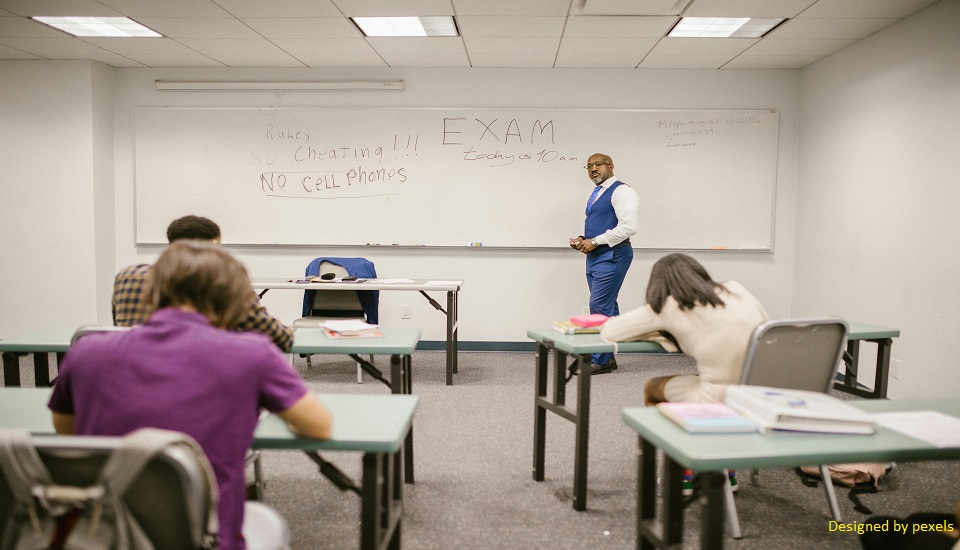
Here is a question worth sitting with:
When you hand back a marked exam, what happens next?
If the answer is "students check their score, maybe scan a few red marks, and then the paper goes in a bag never to be seen again", you are not alone.
That is what happens in the vast majority of classrooms across the world, at every level of education.
And it is one of the most significant missed opportunities in teaching.
The way a teacher handles exam mistakes tells students something profound, not just about the subject, but about what the teacher believes learning actually is. Whether analysing mistakes is treated as damage control or as a core teaching philosophy change everything: the classroom culture, the student relationship with failure, and ultimately, the depth of learning that is possible.
This is not a small distinction. Teachers pursuing Master's Degree Programs in education consistently identify error analysis as one of the areas where the gap between surface-level teaching and genuine pedagogical depth is most visible.
Let's get into what that gap actually looks like and what it costs students when it isn't closed.
What Most Teachers Actually Do After an Exam
Be honest about the typical post-exam sequence:
- Papers are returned with a grade and some written comments
- The teacher goes through the "commonly missed" questions on the board
- Students who got things wrong feel varying degrees of embarrassment or relief
- The class moves on to the next unit
This is damage control. It is reactive, brief, and primarily designed to satisfy the administrative requirement that feedback was given.
It is not analysis. And it is certainly not philosophy.
The problems with this approach run deeper than most teachers realise. When error review is treated as a box-ticking exercise, students absorb a specific message: mistakes are outcomes to be noted and left behind, not information to be investigated and learned from. That message quietly shapes how they approach every subsequent challenge, in school and beyond it.
Why Mistakes Are the Most Underused Resource in Any Classroom
Cognitive science is unambiguous on this point.
Errors are not evidence of failure. They are evidence of the gap between what a student currently understands and what they need to understand. That gap is precisely where learning happens, if the teacher knows how to work with it.
When a student gets an answer wrong, several things might be true:
- They misunderstood the concept entirely
- They understood the concept but applied it incorrectly under pressure
- They understood most of it but had a specific gap in a prerequisite skill
- They knew the answer but misread the question
- They ran out of time and guessed
Each of these requires a completely different response. Treating all wrong answers the same way, a red mark, a correct answer written beside it addresses none of them meaningfully.
The teacher who takes time to categorise errors before returning papers is doing something fundamentally different from the one who simply marks and distributes. They are turning an assessment into a diagnostic tool. And diagnostic teaching is one of the most evidence-supported approaches in education.
Difference Between Error Correction and Error Analysis
These two things sound similar. They are not.
“Error correction”, is telling a student what they got wrong and what the right answer is.
“Error analysis”, investigates why the student got it wrong, what that reveals about their understanding, and how instruction needs to respond.
Error correction is fast and feels efficient. Error analysis is slower and requires thinking.
But here is what error correction alone produces: students who know they were wrong but still do not understand why, who will make the same mistake again under slightly different conditions, and who gradually come to believe that they are "just not good at" the subject.
Error analysis produces something different. It produces students who understand their own thinking well enough to catch mistakes before they make them. It produces learners who see a wrong answer as a starting point rather than a verdict.
The practical difference in the classroom:
- After error correction, a student fixes an answer
- After error analysis, a student fixes a misconception
One of those changes is what happens on the next exam. The other changes how the student thinks.
Practical Framework To Analyse Exam Mistakes
This does not require a radical overhaul of how you teach. It requires a shift in how you look at marked papers before you return them.
Step 1: Categorise Before You Return
Before handing papers back, sort errors into types. Are multiple students making the same mistake? That is a teaching gap, not a learning gap. Are errors clustered around specific question types? That suggests a structural issue with how content was delivered or practised. Are errors random and distributed? That suggests test conditions rather than conceptual problems.
This takes fifteen minutes. It changes everything about the conversation that follows.
Step 2: Return Papers With Questions, Not Just Answers
Instead of simply writing the correct answer beside a wrong one, write a question. "What did you think this term meant?" or "Walk me through your reasoning here." This shifts the student's relationship with the feedback from passive reception to active thinking.
Step 3: Build a Class Error Profile
Aggregate mistake data across the class. Which questions had the highest error rates? Which concepts are consistently misunderstood? This data is genuinely useful for planning subsequent lessons. It tells you where to go back, what to reteach, and how to reteach it differently.
Step 4: Create a Re-Engagement Task, Not a Re-test
The instinct when students perform poorly is to retest. But a retest on the same material, without changed instructions, typically produces similar results. A re-engagement task is different. It approaches the same concept from a different angle, using a different format, at a different level of challenge. It gives students a new entry point into understanding they did not reach the first time.
Step 5: Make The Analysis Visible
Have students keep an error log. Not a shame document, but a thinking document. What was the mistake? What was the actual concept? What is their current understanding? What would they do differently? This practice builds metacognitive awareness, which is one of the most powerful predictors of academic improvement across all subjects and age groups.
The Cultural Shift: From Fear of Mistakes to Curiosity About Them
This is where teaching philosophy enters the conversation.
A classroom where mistakes are analysed rather than simply corrected is a classroom where the culture around failure has shifted. Students in these classrooms gradually stop experiencing wrong answers as threats to their identity and start experiencing them as information.
That shift does not happen through posters about a growth mindset. It happens through consistent, repeated modelling by the teacher.
When a teacher says, "interesting, let us figure out what was happening in your thinking here," instead of "no, that is wrong, the answer is X," they are demonstrating something. They are showing that mistakes are worth investigating. That curiosity is the appropriate response to being wrong. The process of understanding matters more than the performance of having understood.
This is not soft or idealistic. It is evidence-based. Students who develop this relationship with mistakes show measurably higher resilience in the face of academic challenge, stronger long-term retention of corrected misconceptions, and significantly greater willingness to attempt difficult tasks.
Why This Matters More at Higher Levels of Education
The stakes of error analysis increase as students’ progress through school and into higher education and professional life.
At the primary level, a misconception left uncorrected creates a gap. At the secondary level, that gap becomes a structural problem that compromises understanding of everything built on top of it. By the time a student reaches university, accumulated uncorrected misconceptions can make entire domains of knowledge feel inaccessible.
Teachers who take error analysis seriously at every stage are not just improving performance on the next exam. They are building the kind of cumulative understanding that makes future learning genuinely possible.
This is why educators deepening their practice often find this area central to their development. An Online Master's Degree in India focused on educational practice consistently includes error analysis, diagnostic teaching, and assessment design as foundational areas, precisely because these skills have such a broad impact on student outcomes across subjects and age groups.
Practical Barriers and How to Actually Overcome Them
The most common objection to error analysis is time. And the objection is legitimate. Teachers are overloaded.
But consider the time currently spent on reteaching content that students did not understand the first time, managing disengagement from students who have decided they cannot do a subject, and re-explaining concepts that should have been consolidated but were not.
Error analysis, done systematically, reduces all of these demands over time. It is an upfront investment that pays dividends in fewer repetitive teaching cycles.
Some practical ways to make it manageable:
- Do a full error analysis after major assessments only, not every quiz
- Use a simple three-column error log: mistake, concept, revised understanding
- Build five minutes of explicit error analysis into the lesson after any graded work is returned
- Share anonymised class error profiles so students see they are not alone in their misconceptions
- Train students to self-categorise their mistakes before discussion, which reduces teacher load while building metacognition
The Bottom Line
Handing back a marked exam is one of the most repeated acts in a teacher's professional life. Done without intention, it is a administrative routine. Done with genuine pedagogical purpose, it is one of the most powerful teaching moments available.
The teachers who treat error analysis as a philosophy rather than a procedure are building something specific in their students: the capacity to learn from being wrong, which is the most important academic skill there is.
For educators looking to develop this kind of depth across their practice, postgraduate study consistently opens the framework that makes it systematic rather than intuitive. Whether through campus-based or distance options, pursuing an Online Master's Degree in India or equivalent postgraduate programmes elsewhere gives teachers the evidence base, the analytical tools, and the professional language to translate good instincts into consistent, replicable teaching practice.
Mistakes are not the problem. Leaving them unexamined is.
Frequently Asked Questions (FAQs)
1. What is exam mistake analysis?
Exam mistake analysis is the process of studying why students made specific errors in an exam, what those errors reveal about their understanding, and how teaching should respond to those gaps.
2. How is error analysis different from error correction?
Error correction tells students what they got wrong and gives the right answer. Error analysis goes deeper by identifying the reason behind the mistake and helping students fix the misconception.
3. Why should teachers analyse exam mistakes?
Teachers should analyse exam mistakes because wrong answers reveal important information about student thinking, concept gaps, test pressure, misreading, and areas where teaching may need to be adjusted.
4. How can teachers use exam mistakes to improve learning?
Teachers can categorise errors, ask students reflective questions, create class error profiles, design re-engagement tasks, and encourage students to maintain error logs for better metacognitive awareness.
5. What is a class error profile?
A class error profile is a summary of common mistakes made across the class. It helps teachers identify which concepts were widely misunderstood and where reteaching or different instruction is needed.
6. Why are mistakes important in learning?
Mistakes are important because they show the gap between current understanding and required understanding. When explored properly, they help students learn more deeply and avoid repeating the same errors.
7. How do Master’s Degree Programs help teachers with error analysis?
Master’s Degree Programs help teachers understand diagnostic teaching, assessment design, student misconceptions, and evidence-based feedback strategies, making error analysis more systematic and effective.
Written By : Abhishek