Blindfold Activities for Children: 10 Games That Build Trust and Teamwork
20th April 2026
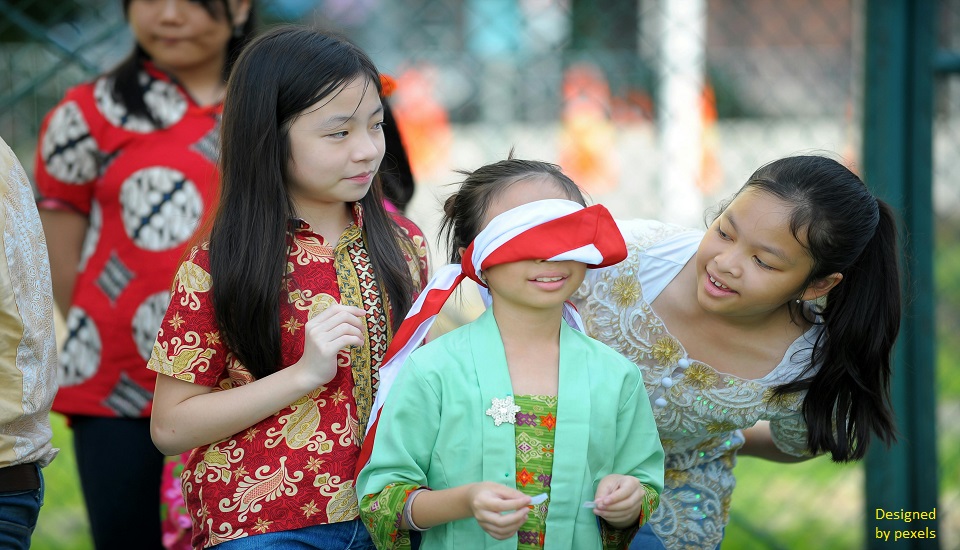
What happens when you take away a child's most dominant sense and replace it with pure trust?
Something remarkable, actually. Children laugh more nervously, listen more carefully, and lean on each other in ways they never do when their eyes are open. Blindfold activities aren't just fun, they're one of the most powerful experiential tools educators have. And the best part? You need almost nothing to run them.
Whether you teach kindergarteners or upper primary students, these ten games will transform your classroom or playground into a space where trust is built, senses are sharpened, and teamwork becomes second nature.
Why Blindfold Activities Are Backed by Child Development Research
Before we get to the games, it's worth understanding why these activities work so well developmentally.
When children are blindfolded, their brains immediately compensate by amplifying other sensory pathways, touch, hearing, smell, and spatial awareness. This sensory recalibration isn't just interesting; it actively strengthens neural connections associated with emotional regulation, attention, and social bonding.
Educators pursuing a Master of Education in Early Childhood and Special Education study this in depth, how sensory-rich experiences directly influence cognitive development and emotional security in young learners. The research consistently shows that structured play involving sensory deprivation (like blindfolding) can significantly improve a child's proprioception, patience, and ability to communicate under pressure.
These aren't fringe ideas. They sit at the heart of trauma-informed, inclusive, and developmentally appropriate practice.
What Skills Do Blindfold Games Actually Build?
Here's a quick breakdown before the games begin:
- Trust: Children must rely on peers or teachers, building genuine emotional safety
- Active listening: Verbal instructions become lifelines
- Sensory integration: The brain learns to process non-visual information efficiently
- Empathy: Being guided makes children more aware of others' vulnerability
- Communication: Clear, calm direction-giving becomes a real skill
- Resilience: Managing uncertainty without shutting down
Now, let's get into the games themselves.
10 Creative Games That Build Trust, Sensory Awareness, and Teamwork
1. Blind Obstacle Course
Set up a simple obstacle course using chairs, cones, or rope on the floor. One child is blindfolded; a partner guides them using only their voice, no touching allowed.
Why it works: This forces precise verbal communication. The guiding child has to think about how they give instructions ("step left, now move forward slowly") rather than just grabbing and pulling. Swap roles after each round.
Tip for teachers: Debrief afterward. Ask: "What made you feel safe? What made you nervous? What did your partner do really well?" The conversation is often more valuable than the game itself.
2. Texture Treasure Hunt
Place a collection of objects with different textures in a box or bag — sandpaper, velvet, a rubber ball, a pinecone, a smooth stone. Children reach in blindfolded and try to identify each object by touch alone.
Why it works: This is a direct sensory integration exercise. It builds tactile discrimination, the brain's ability to gather detailed information through touch, which is foundational for early writing, fine motor control, and even reading readiness.
Extension: Ask children to sort objects by texture before looking. Create a simple chart together afterward.
3. The Blindfold Drawing Challenge
One child draws while blindfolded, following verbal instructions from a partner. ("Draw a big circle. Now put two small triangles on top. Add a rectangle underneath.")
Why it works: This game reveals a lot about how children give instructions, how they respond to confusion, and how they handle imperfect results. The laughter that comes from seeing the drawings is priceless, but the real learning is in the process.
Classroom use: Use this to introduce concepts of maps, directions, or geometric shapes in a completely hands-on way.
4. Blind Man's Buff
One blindfolded child stands in the centre of a circle. They spin slowly, reach out, and try to identify a classmate by touch alone, hands, hair, clothing. Everyone stays still until the blindfolded child is close, then they may gently move aside.
Why it works: This builds whole-body spatial awareness and social connection. Children find it hilarious and slightly thrilling, which is exactly the kind of positive stress that promotes learning.
Safety note: Keep the space clear and set a "gentle touch only" rule firmly before starting.
5. Soundscape Sorting
Record or use live sounds, a rustling bag, tapping fingers, crumpling paper, running water. Blindfolded children listen and try to identify each sound, then arrange picture cards in the order they heard them.
Why it works: Auditory processing is deeply connected to language development and literacy. Many children with learning differences, including those on the autism spectrum, benefit enormously from structured auditory attention games.
Educators studying for an M.Ed. with Early Childhood Education & SEN qualification often explore how sensory-focused activities like this one can be adapted as low-cost interventions for children with sensory processing differences, meeting diverse needs without requiring specialist equipment.
6. Blindfold Team Sculpture
In small groups, children are given clay or playdough and must collectively build a shape or object, all while blindfolded. One child can speak; the others must build based on verbal descriptions only.
Why it works: This activity demands role division, patience, and genuine collaboration. The "speaker" role naturally rotates, giving every child a chance to lead and to follow. It's especially effective for children who tend to dominate in group tasks, the blindfold levels the playing field.
7. The Trust Rope Walk
Tie a long rope between two fixed points (trees, goalposts). Blindfolded children hold the rope and walk its entire length without letting go, no guidance from teachers or peers, just the rope.
Why it works: This is a deeply individual challenge about self-regulation and trusting a physical anchor. Children with anxiety often find it genuinely empowering — they discover they can navigate difficulty independently.
Discussion prompt after: "What kept you going when you weren't sure where you were?"
8. Blind Sorting Race
Place a pile of mixed objects (buttons of different sizes, coins, shaped blocks) in front of each child. Blindfolded, they must sort them into groups as quickly as possible.
Why it works: This combines tactile learning with mathematical categorisation — shape, size, and pattern recognition through touch alone. It's a surprisingly effective way to reinforce early maths concepts in a completely multi-sensory format.
Adaptation: For older children, increase complexity. For younger ones, limit the number of categories.
9. Whisper Telephone
Children sit in a circle. A message is whispered into the first child's ear. Blindfolded, each child must pass it on, but they can only communicate through whispers, never touching.
Why it works: This amplifies how much we rely on visual cues in everyday communication. Without facial expressions or lip-reading, children must listen with extraordinary attention. The garbled final message always generates laughter, and a genuine lesson about communication breakdown.
Link to curriculum: Use it to open a conversation about clear writing, precise instructions, or even historical miscommunication.
10. Blindfold Cooking or Nature Exploration
Guide children through a simple sensory experience, smelling herbs, identifying fruits by texture and scent, or exploring natural materials outdoors, all without sight.
Why it works: This is cross-curricular at its best. It connects science (properties of materials), health education (food awareness), and emotional literacy (describing feelings and sensations) in one immersive experience.
Outdoor version: Take children to a garden or park. Ask them to pick up objects from the ground and describe them, then look. The moment of revelation is always memorable.
How to Run Blindfold Activities Safely and Inclusively
A few non-negotiables before you start:
Obtain consent
Never force a child to be blindfolded. For children who are anxious or have sensory sensitivities, offer the option to be the guide instead. This is inclusive teaching, not an afterthought.
Prepare the environment
Clear the space of sharp edges, slippery surfaces, and anything that could cause a fall. Have a designated "safe word" that children can say if they want the activity to stop immediately.
Brief before, debrief after
Tell children exactly what the activity involves before it begins. Afterward, create space to talk about what they felt, not just what happened.
Adapt for individual needs
Children with visual impairments, hearing differences, or sensory processing challenges may need modified roles. The goal is participation and inclusion, not uniformity.
The Bottom Line
Blindfold games are deceptively simple, a piece of fabric, a group of children, and suddenly, you've created conditions for genuine trust, empathy, and deep sensory learning. These activities translate across age groups, learning contexts, and cultural settings, making them genuinely universal tools for educators worldwide.
For teachers looking to deepen their understanding of how play, sensory learning, and inclusive pedagogy intersect, a Master of Education in Early Childhood and Special Education provides the theoretical grounding to not just run these activities, but to understand precisely why they work, and how to adapt them thoughtfully for every child in the room.
The best classroom moments often happen when children can't see. So take away the visual noise sometimes, and watch what they learn to find instead.
Frequently Asked Questions (FAQs)
1. What are blindfold activities for children?
Blindfold activities are games where children perform tasks without sight, helping develop trust, sensory awareness, and communication skills.
2. Why are blindfold games important in classrooms?
They improve listening, empathy, teamwork, and sensory integration, which are essential for overall child development.
3. Are blindfold activities safe for children?
Yes, when properly supervised, with a safe environment and clear instructions, these activities are both safe and highly beneficial.
4. What skills do children develop through blindfold games?
Children develop trust, communication, resilience, spatial awareness, and problem-solving skills.
5. Can blindfold activities be used in international classrooms?
Yes, these activities are adaptable across cultures and align well with lesson planning for international classrooms, making them effective globally.
Written By : Sanjana